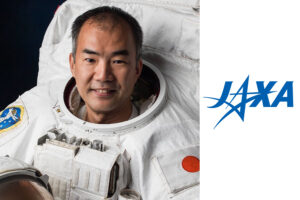
Soichi Noguchi
Soichi Noguchi was born in 1965 in Kanagawa. In 2005, he participated in an International Space Station (ISS) assembly mission aboard the Space Shuttle Discovery, and acted as leader of three Extravehicular Activities. In 2009, he flew as the first Japanese left-seater on the Soyuz spacecraft. As a Flight Engineer on ISS Expeditions 22 and 23, he spent about five and a half months aboard the ISS, carrying out tasks such as mounting the Small Fine Arm of the robotic arm of Kibo and conducting experiments. He is currently aboard the ISS as a resident crew member, having arrived via the first operational Crew Dragon space capsule (Crew-1).In 2020, he became the first non-American to board SpaceX Crew Dragon spacecraft (Crew-1), and performed his fourth EVA, the most by any Japanese astronaut. He was the first astronaut in the world to accomplish three different methods of Earth entry (runway, ground, and ocean), and officially certified by Guinness World Records.
What connections enable spatial exploration?
Space exploration by crews, whether within space habitats or on the surface of celestial bodies, relies on a combination of technological, cognitive and sensory inputs. These explorers find themselves in unusual environments and must carry out numerous and difficult tasks. Whether in a pressurized habitat or in a space suit for external activities, sensory integration within the brain plays a crucial role. For example, vision identifies references; proprioception gives an idea of the body’s attitude in space; in a pressurized habitat, hearing provides complementary signals. To carry out tasks, movements, trips, everyone constructs a mental map which is necessary to direct the action or plan a route. Orientation and control of movements rely on these mental representations and on navigation based on memory. All these processes require a very high level of integration, based on solid connections between sensors. Several technological tools are now available to improve this “awareness of space” whether they are navigation and location systems, vision enhancers (head up display, night glasses) or autonomous companions (drones, rovers). These tools provide new channels to improve situational awareness and improve physical or virtual exploration of new, unknown, inaccessible to humans or dangerous locations. Beyond these technical aspects, the connections of astronauts within the crews, the connections with the control centers and the ground controllers are all crucial enablers for life in or the exploration of space. These interconnected elements work together to enable space exploration. As with astronauts, many technical tools are now new partners in our daily terrestrial life, whether it is navigating in a new terrestrial environment or helping lay people to accomplish several daily tasks.