16 November 2023
12:20 – 13:05
Amphithéâtre Say
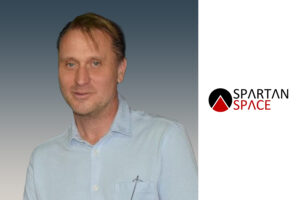
Peter Weiss
Peter Weiss, Founder of Spartan Space, a start-up specializing in the development of underwater and space habitats. Spartan Space is involved in the development of the European Gateway modules and is developing, under CNES contract, a secondary habitat concept for the lunar surface. The start-up is part of CNES’s TECHNTHEMOON. Throughout his career, he has tried to combine his passion for space and the oceans. Peter has worked at DLR on a robotic arm, at the Massachusetts Institute of Technology on the development of artificial muscles for planetary robots, at Cybernetix on underwater robotics, at Hong Kong Polytechnic University on a robotic sampling device for the PHOBOS-GRUNT mission and as head of the COMEX Space Department in space simulations. He was Co-Founder of Powersea, a start-up in the marine renewable energy sector. Peter was a prize-winner in theAPOPHIS Mission Competition, sponsored by NASA and ESA. He received the Homeland Security Medal for psychological support to the families of the Germanwings crash in 2015 (as a member of the Red Cross), the ESA OCEANS X SPACE award in 2018 and a special mention in the Jacques Rougerie Competition in 2020 for EUROHAB.
How much energy is needed for a European habitat on the moon?
ARTEMIS will usher in a new era of space exploration. The Moon is not “a” stepping stone to Mars, it’s the stepping stone to further exploration. The target for future missions is the South Pole, because of its strategic resources. But it’s important to understand that this region is the size of Paris. Alongside the Americans, Chinese and Indians, what role could Europeans play? Peter Weiss will present ARTEMIS from a European perspective, but also from the point of view of one of the French space start-ups targeting the Moon. Marseille-based SPARTAN SPACE is working with its industrial and institutional partners on the development of a secondary habitat, EUROHAB. It can serve as a base camp for extra-vehicular activities by ARTEMIS crews, and could become a rallying point between different missions. This will be the first permanent base on another celestial body – and it could be “Made in France”. Technologies that can be used to support astronauts on the Moon can contribute to challenges on planet Earth: energy and water management. The development of technologies for space exploration can also help with our terrestrial challenges.