4 December 2025
5:05 PM – 6:40 PM
Amphi Grand Kursaal
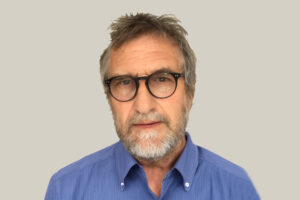
Olivier Kaeppelin
Olivier Kaeppelin is a writer and exhibition curator. He has held numerous positions in public and private cultural institutions, including deputy director in charge of programming at France Culture, director of visual arts at the Ministry of Culture and Communication, director of the Palais de Tokyo Project, and director of the Maeght Foundation. The initiator of several major events, such as Monumenta, Blickachsen (Frankfurt, Germany), and the Busan Biennale (South Korea), and for the past three editions, president of the Saint-Paul-de-Vence Biennale, Olivier Kaeppelin is a fervent advocate of contemporary art, which has led him to frequent studios around the world. An art critic and exhibition curator, his knowledge of the field is matched only by his desire to constantly discover, follow, understand, and communicate. He has written numerous essays and texts on art, notably on Gérard Gasiorowski, Daniel Dezeuze, Richard Deacon, Fabrice Hyber, Jean-Claude Ruggirello, Joan Miró, Lee Bae, Jonathan Lasker, Yves Zurstrassen, Yan Pei Ming, Jacques Monory, Toni Grand, Damien Cabanes, Philippe Cognée, Gérard Garouste, Pascal Convert, Markus Raetz, and others.
Does painting have limits?
To question the “limits of painting” is to question a practice that, since its origins, has constantly reinvented itself while coming up against its own obstacles. The limits of the medium and the frame, which impose constraints but also open up possibilities beyond the frame; the limits of representation, where pictorial language oscillates between the illusion of reality and abstraction; the limits of the discipline itself when it frequents and hybridizes with installation, performance, or digital art. Far from heralding the end of painting, these tensions reveal its vitality. Each transgression, hybridization, or attempt at discarding it raises the question of what it can still produce in terms of sensory and critical experience. Faced with the proliferation of immaterial images and innovations in the visual world, the materiality of pigments and gesture, which may appear as resistance or impediments, also constitutes a plural source of creation. Our round table discussion proposes to explore these paradoxes. Painting will be considered not as a vestige, but as a territory with unlimited possibilities.