3 December 2025
9:50 AM – 10:35 AM
Salle Proudhon
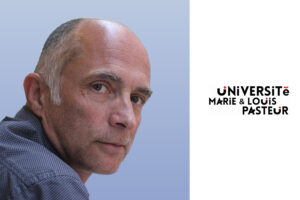
Alexandre Moine
Alexandre Moine is a professor of geography at Marie and Louis Pasteur University, affiliated with the ThéMA Laboratory (CNRS) and a research associate at the LASA Laboratory (CNRS). He has also been in charge of the Master’s program in Planning and Governance in the Global South, affiliated with the Besançon University Distance Learning Center, since 2008. In 2015, he published a book entitled “Social Work and Territory: Concepts, Tools, and Methods,” which serves as a foundation for new research in territorial intelligence applied to social work. As a member of several scientific councils and co-scientific director of GIS HYBRIDA-IS, he has conducted extensive fieldwork in France to develop concrete and operational tools to support the most vulnerable. His resolutely transdisciplinary research focuses on the complexity of territories, particularly through the implementation of systemic approaches combining the tools of geography and the sociology of translation, in order to establish diagnoses or support the establishment of territorial observatories. More specifically, the aim is to reconsider the relationship between humans and nature from a perspective of respectful co-development.
What are the limits of territorial diagnostics?
Territorial diagnostics must take into account the complexity within which life develops. The complex system we refer to as territory is based on natural and anthropogenic dimensions that are completely intertwined, within which multiple limits must be identified. These are primarily spatial, involving interlocking scales; then organizational, reflecting intertwined and conflicting actors; ideal, based on the multiple representations of the people who act within the territory; linked to places with varying degrees of use, development, or management issues; and finally temporal, given the different dynamics of the four systemic dimensions we have just presented. The aim is therefore to give substance to the system by collecting data and information in various ways, with an emphasis on gathering expertise from users (citizens, professionals, technicians, politicians, etc.); and to make the invisible visible: how the five dimensions taken into account interact, generating multiple constraints that must be taken into account. This theoretical approach is enriched by numerous action research projects in urban revitalization and in the context of issues related to supporting the most vulnerable in social work.