3 December 2025
4:15 PM – 5:00 PM
Salle Proudhon
Louis Jehel
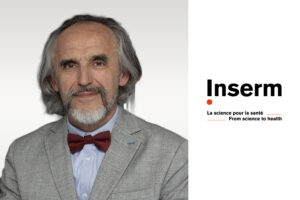
Louis Jehel is a psychiatrist and professor of psychiatry at the University of Picardie, head of the Department of Psychiatry, Liaison Psychology, Addictology, and Psychotraumatology at the Amiens-Picardie University Hospital. Previously, he was a professor of psychiatry at the University of the Antilles and head of the Department of Psychiatry and Addictology at the Martinique University Hospital for 10 years. He is also vice-president of the Association for Training and Research in Medical and Psychological Emergency Units (Association de Formation et de Recherche des Cellules d’Urgence Médico-Psychologique) and head of the IPSOM (Impact of Psychotraumatism in Overseas Territories) research group at the Center for Epidemiology and Population Health at INSERM. A specialist in psychiatric assessment, in 2022 he published a book on psychotraumatology, co-authored with Prof. Mathieu Guidère, focusing on the role and impact of language on psychotraumatism, particularly the psycholinguistic markers of trauma. Continuing this line of research, he published a new book in 2024, again in collaboration with Prof. Mathieu Guidère, on Le Langage intérieur en psychothérapie (Inner Language in Psychotherapy). His expertise in psychotraumatology is regularly sought after for international projects. Given his experience and skills, he is now one of France’s leading specialists in innovative approaches to psychotrauma.
Does inner speech have its limits?
Inner speech, defined as the dialogue we have with ourselves, represents a fascinating boundary between consciousness and cognition. This lecture examines the neurobiological and functional constraints of this mental voice that accompanies our daily thinking. Neuroimaging research reveals that inner speech activates brain circuits similar to those involved in external speech, including Broca’s area and auditory regions. However, limitations emerge: reduced processing speed compared to nonverbal thought, limited capacity for simultaneous processing, and dependence on learned linguistic structures. Analysis of specific populations (people who are deaf from birth, people with aphasia, or people who practice meditation) reveals significant variations in the experience of inner speech. Some people report mainly visual or kinesthetic thinking, questioning the links between language and action. The clinical implications are considerable: understanding these limitations could shed light on the mechanisms of auditory hallucinations and obsessive-compulsive disorders and optimize cognitive therapy strategies. This exploration highlights that our inner monologue, far from being unlimited, operates within a precise neurobiological framework with profound consequences for our understanding of human consciousness.