4 December 2025
3:25 PM – 5:00 PM
Amphi Grand Kursaal
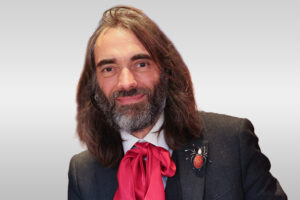
Cédric Villani
After completing his secondary education in Toulon and Paris, Cédric Villani studied mathematics at the École Normale Supérieure in Paris from 1992 to 1996, before spending four more years at the institution as an agrégé préparateur (teacher trainer). In 1998, he defended his thesis on the mathematical theory of the Boltzmann equation. In addition to his thesis supervisor Pierre-Louis Lions, he was influenced by Yann Brenier, Eric Carlen, and Michel Ledoux. From 2000 to 2010, he was a lecturer and researcher at the École Normale Supérieure in Lyon, and is currently at the University of Lyon. He also holds visiting professor positions in Atlanta, Berkeley, and Princeton. From 2009 to the end of 2017, he was director of the Institut Henri Poincaré in Paris. This 80-year-old national institute, dedicated to hosting visiting researchers, is at the very heart of French mathematics. His work has earned him several national and international awards, including the Fields Medal, awarded at the 2010 International Congress of Mathematicians in Hyderabad by the President of India. Cédric Villani is involved in politics, having been elected as a member of parliament for La République En Marche in 2013, standing as an environmentalist candidate for mayor of Paris in 2020, and as a candidate for the NUPES coalition in the 2022 legislative elections. A member of the French Academy of Sciences, Cédric Villani is a tireless ambassador for his discipline to the general public and society at large.
The limits of intelligence, the intelligence of limits
Does intelligence come up against insurmountable barriers, or is it just a perpetual movement of expansion and transcendence? This round table discussion explores the boundaries of knowledge and human, animal, and collective capabilities. Mathematician Cédric Villani explores the limits of understanding in mathematics, that universal language that sometimes stumbles upon the unprovable. Professor Grégory Ninot analyzes the limits of the body, between performance, resilience, and vulnerability. Ethologist Ludovic Dickel reveals how animal intelligence is constantly pushing back the boundaries we have imposed on it. Finally, astrophysicist Alain Riazuelo invites us to go beyond our cognitive abilities to “think the infinite.” Understanding our limits also means learning to overcome, transform, or accept them.