3 December 2025
10:55 AM – 11:40 AM
Amphi Petit Kursaal
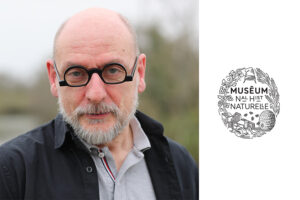
Guillaume Lecointre
Guillaume Lecointre is a lecturer and researcher (UMR 7205), zoologist, taxonomist, and professor at the National Museum of Natural History, where he serves as scientific advisor to the president. He has authored 135 professional publications and 27 books. His research focuses on the phylogeny and systematics of teleost fish, using both molecular and anatomical data. His field of zoology is the Antarctic continental shelf. His activities related to improving science education and disseminating knowledge are very significant; in particular, he wrote the weekly science column for Charlie Hebdo for ten years. He is a two-time winner of the Société Zoologique de France (1996, 2006), the 2009 National Prize of the Comité Laïcité République, the 2012 Prize of the Union Rationaliste, and was made a Knight of the Legion of Honor in 2016.
Are limits structuring for living beings?
What is material is what is changeable, and everything changes, all the time, in the short or long term. When it comes to living organisms, it is common to consider their limits in terms of so-called “extreme” habitats. However, we too often forget that limits are, from the outset, an integral part of living things. It is because populations of living beings vary, and because their variations encounter limits, that living things are what they are and evolve. We would not have natural selection without limits. We will classify these according to two categories of compromises that living organisms constantly make when faced with environmental limits: compromises between the consequences of natural selection itself (internal compromises), on the one hand, and compromises between natural selection and construction constraints and historical constraints (external compromises), on the other. Of course, for a living being, reaching limits is a matter of scale of space and time, but in absolute terms, a real world without limits does not exist.