3 December 2025
3:25 PM – 4:10 PM
Salle Proudhon
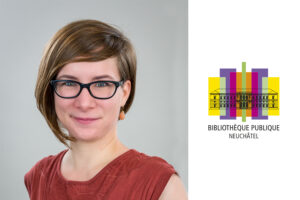
Amandine Cabrio
Amandine Cabrio works as an assistant in the Manuscripts and Private Archives Department of the Neuchâtel Public Library (Switzerland). She holds a Master’s degree in Museum Studies (University of Neuchâtel, Switzerland) and a postgraduate degree in Information Science, Library Science and Archival Studies (Universities of Bern and Lausanne, Switzerland). She is also a doctoral candidate in the history of science and technology. She is completing a doctoral thesis on the certification of chronometers by the Cantonal Observatory of Neuchâtel between the second half of the 19th century and the mid-20th century, analyzing it from the perspective of the relationship between science, the state, and industry.
How can we reach the limits of chronometric precision?
This lecture focuses on the certification of chronometers by observatories in Europe from the 17th century onwards. It examines how these scientific institutions gradually established procedures for verification, measurement, and classification in a context where precision was becoming a major scientific, technical, and symbolic issue. At the heart of the discussion is the question of how to define precision in timekeeping: how is it measured, by whom, and according to what criteria? The conference also aims to highlight how the quest for precision has turned into a race for performance, with its own logic, symbolic thresholds, and commercial stakes. By questioning the ability of observatories to “certify” the precision of chronometers, it offers a critical reading of the history of time measurement through the devices, actors, and institutions involved.