5 December 2025
2:20 PM – 3:05 PM
Amphi Petit Kursaal
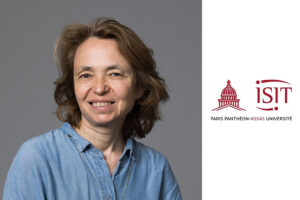
Pascale Elbaz
Pascale Elbaz holds a PhD in Chinese language and civilization from Inalco, and is a teacher-researcher at ISIT, Grande école de l’interculturel et du multilinguisme (Paris-Panthéon-Assas-Université). She is responsible for the school’s transdisciplinary intercultural seminar. She is also a research associate at IFRAE (Institut français de recherche sur l’Asie de l’Est). Her research focuses on two areas: the analysis of Chinese aesthetic and cultural vocabulary, and the pedagogy of translation and terminology in the age of multilingualism and automatic natural language processing (CAT, NLP). She also works as a Chinese-French translator in publishing: Le Chant de la Terre chinoise, Photographies de la Chine d’aujourd’hui (2020); Histoire illustrée de la peinture chinoise (2021) (Ed. Horizon orientale). She is a member of the Research Task Force of FIT (International Federation of Translators) and contributes to articles on the transformation of the translation profession and the training of the new generation of translators.
Does Chinese philosophy help us think about the boundary between art and non-art?
At first glance, the territory of art has its “demarcation line”. As long as it doesn’t cross this line, it’s called art; if it does, it’s no longer art, but craft, or a collection of everyday objects and practices. The question of the limits of art plunges us into the Chinese philosophical tradition, in the writings of Zhu Xi on the question of yin-yang complementarity and Zhang Dainian on the mode of relationship of two opposing objects, caught up in a process of interdependence, mutual inclusion and transformation. The question of the limits of art becomes relative, varying according to time and place, pointing to vast grey areas and transforming the opposition “art or non-art” into the inclusion “art and non-art”. What then of the boundary between the different arts? Can traditional Chinese aesthetics help us to think about intermediality differently?