4 December 2025
9:50 AM – 10:35 AM
Amphi Grand Kursaal
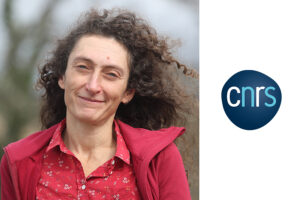
Purificación López-García
By studying microbial diversity and evolution, Purificación López-García strives to enrich our knowledge of the evolution of life on Earth. After studying at the University of Alicante in Spain, she joined the Ecology, Systematics and Evolution Laboratory in Orsay in 2002 as a research fellow. By combining high-throughput molecular approaches with exploration of often extreme environments (deep oceans, alkaline lakes, deserts, oxygen-depleted ecosystems, etc.), her research has led to the discovery of new lineages of microorganisms, both prokaryotes and eukaryotes. Promoted to research director in 2007, Purificación is also an associate member of the Royal Academy of Sciences and Arts of Belgium. In 2012, she was awarded an ERC Advanced Grant for the ProtistWorld project on the evolution of eukaryotic microorganisms in very oxygen-poor environments. In 2016, she and her team explored the Dallol hydrothermal site in Ethiopia, searching for the limits of life in one of the most inhospitable environments on the planet. In 2025, Purificación López-García became a member of the Academy of Sciences.
What are the physical and chemical limits of life?
Studying the physical and chemical limits of life on Earth allows us to assess the potential habitability of extraterrestrial environments. However, identifying these limits in polyextreme environments remains complex due to interpretation biases and confounding factors, such as the widespread presence of microorganisms on Earth. The Dallol proto-volcano site in Ethiopia is a good example: although some hypersaline areas are home to communities of archaea (members of a domain of life particularly well adapted to extremes), the most polyextreme basins seem incompatible with life, mainly because of chaotropic salts. How do organisms capable of living at the boundaries of these physical and chemical limits adapt? These archaea accumulate large amounts of potassium in the cell cytoplasm to maintain osmotic balance and possess the most acidic proteins ever observed. Contrary to the idea that diversity decreases with extremes, these archaea exhibit remarkable diversity and include new families. This diversity seems to be favored by a high metabolic flexibility linked to local geothermal activity, allowing these microorganisms to adapt equally well to cycles of “feast or famine.”