3 December 2025
2:20 PM – 3:05 PM
Amphi Grand Kursaal
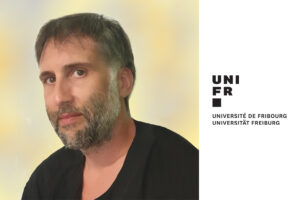
Sebastian Dieguez
Sebastian Dieguez is a researcher in neuroscience and cognitive psychology at the University of Fribourg, Switzerland. His work focuses on belief formation, with a particular emphasis on contemporary conspiracism. He is also interested in the links between psychology and literature, the spread of pseudoscience, and the nature of self-consciousness. Alongside his academic activities, he writes regularly for the magazine Cerveau & Psycho and the satirical journal Vigousse. His latest book is Total Bullshit! Au cœur de la post-vérité (PUF, 2018).
Imagination without limits?
Our inner universe seems open to all possibilities: we can imagine all sorts of things that will never happen in reality, concoct alternative scenarios at will, dream of another world (where life would be fruitful). Is there no limit to our imagination? Yes, and the very fact of asking this question proves it! Indeed, we struggle to imagine what a limitless imagination would be like: we’re stymied by our inability to access our own mental states and picture their full extent. But in addition to our own imagination and the concept of infinity, there are many other things we find hard to imagine, such as nothingness, immorality, madness, perfection, round triangles or strawberry cod. On the other hand, excesses of imagination are generally painful or inadvisable for us, as shown by cases of pathological rumination, compulsive daydreaming, confabulation or manic states. Imagination seems to be limited in every way, and that’s what makes it so mysterious and fascinating at the same time.