3 December 2025
10:55 AM – 11:40 AM
Amphi Grand Kursaal
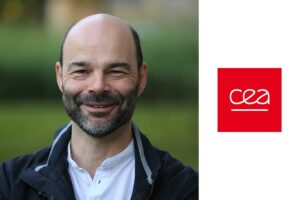
Roland Lehoucq
Roland Lehoucq is an astrophysicist in the Astrophysics Department at CEA Saclay. He teaches at the Institut d’études Politiques and in the ASE2 master’s program (Approche Sociale de l’Energie et de l’Environnement) at Paris Diderot University. He has published numerous works, including “La science fait son cinéma” and “Faire des sciences avec Star Wars”. Since 2012, he has been President of Utopiales, the international science fiction festival in Nantes. The asteroid (31387) Lehoucq bears his name in tribute to his involvement in the dissemination and sharing of knowledge.
Where are the limits of what’s possible?
To create the sense of wonder associated with science fiction, an author often inserts exaggerated or even inaccurate technical or scientific elements. Discussing their relevance and, where appropriate, answering the question “Why is it wrong?” in a reasoned way, enables us to analyze in detail the scientific concepts featured in science fiction and, ultimately, to learn about our world. This practice leads to an attempt at a “classification of the impossible”, which is tantamount to expressing an opinion on the current state of scientific and technical knowledge: science fiction is a way of confronting it with its limits, and reflecting on the boundary that separates the ‘possible’ from the “impossible”. For example, the ideas of flying a heavier-than-air craft, visiting other planets or building a global information network were all seen as impossible before they were finally realized. But does this mean that everything thinkable is achievable? The only way to find out is to follow Clarke’s Second Law: “The only way to discover the limits of the possible is to venture a little beyond them, into the impossible.” That’s precisely what we’re going to do in this lecture.