3 December 2025
3:25 PM – 4:10 PM
Amphi Grand Kursaal
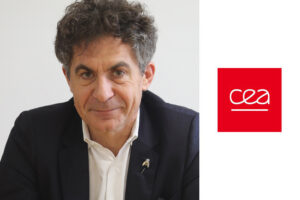
Etienne Klein
An alumnus of the Ecole Centrale de Paris and Doctor of Philosophy of Science, Etienne Klein heads the matter science research laboratory at CEA. He is a professor at the ECP and hosts the program La conversation scientifique on France Culture. In 1994, he published Conversations avec le Sphinx. Les paradoxes en physique, his first book. Numerous publications follow, including Il était sept fois la révolution. Albert Einstein et les autres in 2005, Le facteur temps ne sonne jamais deux fois in 2007, Discours sur l’origine de l’Univers in 2010, Anagrammes renversantes ou Le sens caché du monde in 2011, D’où viennent les idées (scientifiques)? and En Chercher Majorana. Le physicien absolu, in 2013, Le monde selon étienne Klein in 2014… He took part in Objectif Mont-Blanc, sur les traces d’un géant, a program produced by Arte in 2015. A mountaineer and endurance sports enthusiast, he has been taking part in the Ultra-Trail du Mont-Blanc races for several years now. Etienne Klein was named Chevalier de la Légion d’honneur in 2010, then Officier dans l’ordre national du Mérite and Commandeur des Palmes académiques in 2014.
Physics or the art of crossing the limits of our world?
Consigned as we are to a limited world – our planet and its immediate environment – everything leads us to believe that it constitutes the right reference for thinking and understanding. That it contains all the necessary and sufficient ingredients for identifying the laws of the world, those that are most “natural”. But the “real” laws of physics are not the result of a bureaucracy of appearances, nor of an empathetic connivance with things. In fact, they are radically different from those we deduce from the spectacle the world offers us, or even from our simple physical feelings. To discover the laws of physics, we had to literally “go and find them”, going beyond certain limits, notably those of our senses. Modern physics can therefore be said to be the result of stepping out of the body, or rather out of the world. It also requires “the mind to draw from itself more than it has”, as Bergson says in La Pensée et le mouvant. Its builders have indeed invented stratagems that have enabled them to fictitiously “make themselves seen elsewhere”.