4 December 2025
5:05 PM – 5:50 PM
Salle Proudhon
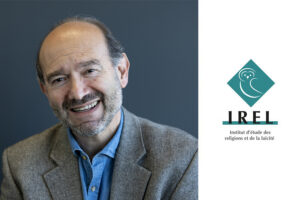
Philippe Gaudin
Philippe Gaudin, associate professor of philosophy and doctor of the EPHE (Ecole Pratique des Hautes Etudes, specializing in religions and systems of thought), is the previous director of the IREL (Institut d’Etude des Religions et de laïcité), created in 2002 by the Minister of Higher Education and Research within the EPHE. He divides his work between research and training on secularism and religious facts in the contemporary world. He works for the French Ministry of Education, hospitals, prefectures and departmental and regional councils. He has published: “Que veut dire laïcité?”, “Vers une laïcité d’intelligence en France?” and “Tempête sur laïcité”.
What does Nietzsche mean by the limit?
If we are familiar with the Greek birth of philosophy, we don’t fully appreciate the extent to which it is also in the atmosphere of ancient Greece that Nietzsche will draw the terms and tensions of his own attempt at thought. Justice as the harmony of wisdom, courage and temperance: there can be no philosophy without proportion and harmony. Mathematics, music and gymnastics: such is the order of the lovers of wisdom, on this land bordered and limited by the sea, that indefinite space both seductive and dangerous. The Germans, in particular, were the champions of classical Greek art. The Athens of the fifth century B.C. was a short, perfect moment of equilibrium that was never to be regained, when mankind first entered its true limits, symbolized by the statue of the god or goddess who dwells in the open, yet closed, space of the Greek temple. But the philologist Nietzsche was to react: “incipit tragoedia”, the Apollonian measure would be challenged by the Dionysian excess. Nietzsche’s first major work – The Birth of Tragedy – places this secondary god at the forefront of the forces of heaven and earth. It was a constant in the life of the philosopher who, at the troubled end of his life, identified himself as much with the “crucified” as with Dionysus torn apart by the Titans. If the work of art is born of the creative tension between the forces of measure (Apollo) and those of excess (Dionysus), it is the latter that Nietzsche will focus on, for it suggests that the most authentic Greece is that of tragedy, a total work of art associated with Dionysian rites. Victory of the tragic over the classical? Things are undoubtedly more complex, and Nietzsche will continue to praise restricted perspectives, rigorous discipline and constraint as conditions for creative freedom (paragraph 188 of Beyond Good and Evil). What if the classic were the sign of an excessive abundance of forces that need form to contain them?