5 December 2025
1:30 PM – 2:15 PM
Amphi Grand Kursaal
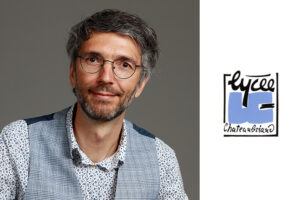
Maxime Abolgassemi
Maxime Abolgassemi teaches literature and general culture in preparatory classes at the Lycée Chateaubriand in Rennes. He holds a doctorate in literature (Université Paris-Sorbonne) and an agrégation in modern literature, as well as a master’s degree in theoretical physics (Université Pierre-et-Marie-Curie). His work focuses on the Surrealists’ “objective chance”, the notion of counterfiction he introduced, and democratic transparency (to which he is devoting a forthcoming book). In 2017, he published Nuit persane, a first novel that plunges the reader into Tehran in the final years before the Iranian Revolution.
What are the limits of musical AI?
AI isn’t just about making war more efficiently, or saving time on repetitive or highly codified tasks. It also has an artistic dimension, which I would define as generating regularities arranged to please. When I tested the musical generation, I was stunned not by pretty workmanship (“it sounds good, or credible”) but by the richness of what one is tempted to call fair and sensitive interpretation. The voices, in particular, are a far cry from mechanical delivery. However, this generation has a number of limitations, the first of which is undoubtedly the absence of intention, despite the emotional accuracy of the interpretation received. It’s therefore fascinating to consider these limits, and to use this example to reflect on the limitations of AI’s apparent creativity. For if, one day, AI is destined to become the mistress of the world, its impact on our aesthetic emotions will not be the most trivial.