4 December 2025
9:50 AM – 10:35 AM
Salle Proudhon
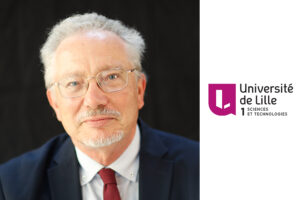
Jean-Paul Delahaye
Jean-Paul Delahaye is Professor Emeritus at the University of Lille and a researcher at the CRISTAL laboratory (Centre de recherche en informatique signal et automatique de Lille, UMR CNRS 9189). His work focuses on sequence transformation algorithms (Thèse d’Etat), the use of logic in artificial intelligence (expert systems, Prolog language), computational game theory (iterated games, simulation of social systems, study of cooperation), and algorithmic information theory (Kolmogorov complexity theory, notion of computational content), with particular applications to bioinformatics and finance. He is currently working on cryptocurrencies and blockchain technology. He is also interested in ethical issues in science and was a member of the CNRS Ethics Committee (COMETS) from 2016 to 2021. He has supervised 20 theses. He is the author of some twenty books, some of which are aimed at a wide readership. In 1998, he received the Prix d’Alembert from the Société Mathématique de France and, in 1999, the Prix Auteur de la Culture Scientifique from the French Ministry of Education and Research. He writes the 6-page monthly column Logique et calcul in Pour la science (the French version of Scientific American). He also runs a blog (http://www.scilogs.fr/complexites/) devoted to “Complexités”.
What are the limits of calculation?
Calculating is a physical process. It is therefore not surprising that physicists are asking themselves the question of the minimum energy cost of an elementary calculation operation, and more generally of the minimum cost of any calculation process. The question is less simple than one might imagine because the answer depends on whether or not it is possible to reverse the calculation. The negation operation B = not(A), for example, is invertible; from B, A can be recovered. The operation associated with the “logical or” C = A or B is not invertible; knowing C, A and B cannot be recovered with certainty. This is the problem of the “limits of calculation” that Rolf Landauer in 1961 and many others since then have studied. The answer is actually very important for designing increasingly efficient circuits and as our microprocessors progress it becomes central. Quantum computing, which will eventually become a reality, is particularly concerned with the question.