4 December 2025
10:55 AM – 11:40 AM
Amphi Grand Kursaal
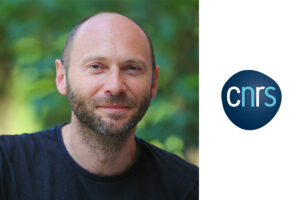
Jean-Sébastien Steyer
Jean-Sébastien Steyer is a paleontologist at the CNRS and the Paris Museum of Natural History. A specialist in life before the dinosaurs, he travels the world in search of fossils. He is interested in the major extinctions that have marked the history of life and regularly publishes popular science books that quickly become reference works (La Terre avant les dinosaures, Les Insectes du Futur). He is also a lecturer and exhibition curator.
What are the limits to dinosaur reconstructions?
Paleontology is concerned not only with reconstructing extinct species such as dinosaurs, but also the entirety of past environments – paleoenvironments. To do this, paleontologists turn into Sherlock Holmes to make fossils talk. But there are limits to the investigation: not all organisms fossilize, such as those made up of soft tissue, which are so abundant in ecosystems. Secondly, not all fossils are complete: there are many corpses, nibbled away by scavengers, whose remains are fragmentary. Then, not all fossils, however well preserved, are discovered: most are destroyed by natural or man-made erosion. Finally, not all discoveries are studied: many fossils end up on the market rather than being studied. What then remains for the paleontologist to reconstruct these “lost worlds”? Methods such as comparative anatomy and phylogeny, which can nevertheless provide a precise – and above all, testable – reconstruction of paleoenvironments. Even if it does have its limitations, paleontology is effective in its multi-disciplinary approach: by studying fauna, flora, rocks and climate all at once, a paleoenvironment that is as complete as possible can be established.