2 April 2024
09:50 – 10:35
Amphi 1
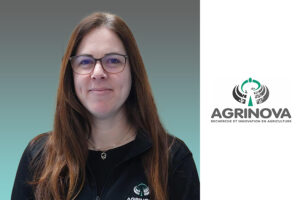
Stéphanie Claveau
Stéphanie Claveau holds a degree in biology from the Université de Sherbrooke, and completed graduate studies in environment, also at the Université de Sherbrooke. Her master’s work was carried out at Agriculture and Agri-Food Canada’s Research and Development Centre in Sherbrooke, and focused on the contribution of dairy cattle manure to greenhouse gas emissions. She was hired by Agrinova in 2006 as Project Manager, and since May 2023, has held the position of Director of Animal and Forage Production, also for Agrinova. During her career at Agrinova, she has carried out several applied research projects in close collaboration with commercial dairy farms on a variety of subjects (feeding, heat detection, comfort and welfare, ruminal acidosis and GHG reduction). She is also responsible for three innovation groups made up of dairy producers from the Saguenay-Lac-Saint-Jean region, which helps keep her in touch with the realities in the field.
Agricultural biomethanization in Quebec: which model to adopt?
Several European countries are already well advanced in biomethanization. However, Germany leads the way with over 44% of European biogas production by 2022. In Quebec, a few projects have been launched in recent years, but the development of this filière is accelerating, and dairy farmers are increasingly being approached, since they have a methanogenic material in their possession: their cows’ manure. When stored, this material already produces methane, which contributes to climate change, so why not capture it and turn it into energy? Especially since the material resulting from biomethanization (digestate) can be returned to them in the form of an even more efficacious fertilizer than raw manure. Still, it’s the methane molecule that’s most profitable in this concept, so how do we ensure that growers get their money’s worth? In this presentation, we’ll explore the vast world of agricultural biomethanization with a brief history, a description of processes and an overview of existing models.