2 April 2024
15:25 – 16:10
Amphi 1
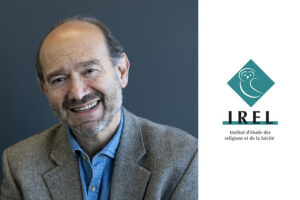
Philippe Gaudin
Philippe Gaudin, associate professor of philosophy and doctor of the EPHE (Ecole Pratique des Hautes Etudes, specializing in religions and systems of thought), is director of the IREL (Institut d’Etude des Religions et de laïcité), created in 2002 by the Minister of Higher Education and Research within the EPHE. He divides his work between research and training on secularism and religious facts in the contemporary world. He works for the French Ministry of Education, hospitals, prefectures and departmental and regional councils. He has published: “Que veut dire laïcité? “and “Vers une laïcité d’intelligence en France? “and “Tempête sur laïcité”.
Are mystics more energetic human beings?
Mystics are reputed to have an intimate and personal experience of hidden and mysterious things, of divine realities. These altered states of consciousness seem to take them out of the world in such a way that we readily imagine they want to change the world rather than change the world. Is this really so? The list is long, from monastery builders and tireless travellers to personalities like Gandhi and Martin Luther King. But what if we had to change the world to better change the world? Philosopher Henri Bergson explains that we can only move from a static to a dynamic religion, from a closed morality centered on our own to a morality open to humanity, through concrete individuals rather than abstract ideas. His conception of mysticism is profoundly oriented towards transformative action in the world. Is this disposition reserved for a tiny minority of exceptional people who also claim to be “believers”? This quote from Bergson, speaking of the romantic love invented in the Middle Ages, hints at a much broader perspective: “When mysticism is criticized for expressing itself in the manner of amorous passion, we forget that it was love which had begun by plagiarizing mysticism, which had borrowed from it its fervor, its impulses, its ecstasies.”