4 April 2024
10:55 – 11:40
Amphi 1
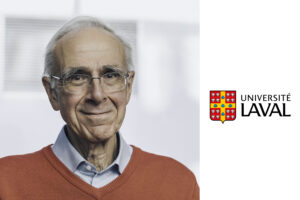
Michel Pigeon
Michel Pigeon is Associate Professor in the Department of Sociology and Professor Emeritus in the Department of Civil Engineering at Université Laval in Quebec City. He was rector of this university from 2002 to 2007 and member of the National Assembly for Charlesbourg from 2008 to 2012. In 2022, he defended a doctoral thesis entitled Les jeunes et les changements climatiques – Quels choix de société? He has received numerous awards and distinctions, including the Wason Medal for Materials Research from the American Concrete Institute in 1991, an honorary doctorate from the Institut national des sciences appliquées de Lyon in 2005, a second from the Université de Liège in 2006, and the Grand diplômé award from Université Laval in 2023. He is also an Officer of the French Order of Academic Palms (2006).
Climate change and energy: how do young people perceive it?
As part of a recent research project in environmental sociology, we interviewed some 50 students from various educational levels (university, technical college and vocational high school) and socio-economic backgrounds. In the course of the interviews, aimed primarily at understanding the characteristics of the ideal society that young people would like to see in the face of the challenge of climate change, we addressed a number of questions related to energy considerations, including their understanding of the main phenomena, their effects and possible solutions, their current personal behaviours, their desired behaviours for the future, and the impact of future technological developments (including those concerning energy). Analysis of the results highlights not only the different parameters that determine the vision of the ideal society desired, but also the main solution, which for most of them is to change our lifestyle and reduce consumption. The young people surveyed don’t seem to be particularly concerned about the energy transition. The electrification of transport and the development of renewable energies seem to them to be a matter of course, and their implementation was not the subject of any particular comment during the interviews.