2 April 2024
10:55 – 12:30
Amphi 4
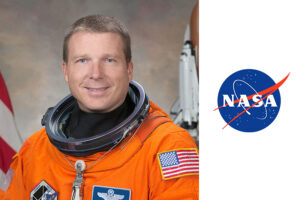
Terry Virts
Terry Virts trained as a fighter pilot at the French Air Force Academy in 1988, as part of an exchange program with the U.S. Air Force Academy. He joined an operational unit flying the F-16 in 1992. He was posted to Korea and Germany. In 1997, he joined the Embry-Riddle Test Pilot School (USA) and became a test pilot from 1999 until his selection as an astronaut by the National Aeronautics and Space Administration (NASA) in 2000. He has flown 3,000 hours on 40 types of aircraft. Virts was selected as an astronaut in 2000 as part of NASA’s 18th astronaut group. He made his first space flight in February 2010 as pilot of Space Shuttle Endeavour on mission STS-130. Terry Virts took part in expeditions 42/43, and was commander of expedition 43. On November 23, 2014, he lifted off from the Baikonur Cosmodrome aboard the Russian Soyuz TMA-15M, accompanied by Samantha Cristoforetti (ESA) and Anton Shkaplerov (Roscosmos). He returned to Earth after 199 days aboard the International Space Station (ISS) on June 11, 2015. His return had been scheduled for May 2015, but due to the loss of a Progress module, it had to be postponed until June 11. During this second mission, he performed 3 spacewalks in the company of Barry Wilmore for a total of 19 hours.
What kind of energy is needed for space exploration?
Space exploration calls on multiple sources of energy, for example to power probes, satellites and manned space flights, not to mention the numerous pieces of equipment that also require energy. From solar panels and thermoelectric generators to batteries, nuclear reactors and chemical fuels, each source of energy comes into play, and the choice of one or other depends on the specific requirements of each mission. It would be inconceivable to talk about the energy required for a space mission without mentioning that of its crew. How do you train, organize yourself, manage your periods of activity and rest; how do you organize yourself as a team, cooperate and make decisions? Human and machine move forward together.