4 April 2024
09:50 – 10:35
Amphi 2
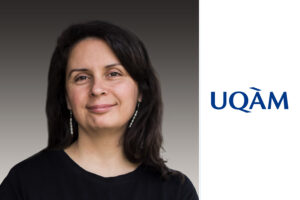
Christine Ouellet
Christine Ouellet is an artist and researcher in ceramic arts and new technologies. She teaches at the Maison des métiers d’art de Québec in the college ceramics program and at the Université du Québec à Trois-Rivières in the philosophy and arts department. She is responsible for coordinating the ceramics workshop at Atelier Silex in Trois-Rivières. Her current research focuses on the relationship between geology and genealogy, through the complementarity of materials and new media. Her work has been shown at art biennials, solo and group exhibitions, and as part of creative residencies in Quebec and France. She is the recipient of several awards and bursaries. She holds a diploma in ceramics, a bachelor’s degree in visual arts (new media) and a master’s degree in art and aesthetics from the Université du Québec à Trois-Rivières. She is currently working on her doctoral thesis in art studies and practices at the Université du Québec à Montréal.
What does it mean to become clay in a ceramic arts practice?
Becoming clay induces the passage from one state to another. When circumscribed to the practice of ceramic arts, this process may seem antinomic. Considering that ceramics is the culmination of the transformation of clay by fire, and that there is no possible return to its original condition, what might this mean? We will attempt to answer this question by taking into account the environmental issues of our time. Since the Guattarian ecosophical proposal (1989), that is, an ethico-political and aesthetic perspective based on the interrelation of three ecologies – social, mental and environmental – the idea of overhauling the system is still relevant today. In the field of visual arts and crafts practices, consideration of the carbon footprint is gradually emerging. In the form of a narrative of practice, we seek to legitimize the preservation of an age-old skill: ceramics. We’ll look at the production of new objects when our living environments are already saturated with them. We’ll take a look at the physical, sensitive and metaphorical characteristics of clay that testify to its agentivity. Attentional gestures towards the material and the exchange of energy that emanates from it will bring us closer to our theme. Anthropologist Tim Ingold (2013) suggests developing a relationship with matter, letting form emerge rather than imposing it. Following in his footsteps, we’ll take a few reflective and exploratory steps to reconcile creation with our ecological concerns.