3 April 2024
10:55 – 11:40
Amphi 3
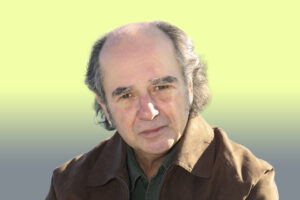
Pierre Ouellet
Pierre Ouellet is a researcher and writer. A member of the Royal Society of Canada and the Académie des lettres du Québec, he was a full professor at the Canada Research Chair in Aesthetics and Poetics at the Université du Québec à Montréal, where he is still an associate professor (now retired). He has published over fifty books, including 17 essays, among them À force de voir. Histoire de regards and Hors-temps, Poétique de la posthistoire, for which he won the Governor General’s Award in 2005 and 2008. His latest essay, Derniers recours followed by Souffler, was published in 2022 by Mains libres. He has also received numerous awards for his novels and poetry, including the 2015 Prix Athanase-David, Quebec’s highest literary distinction, awarded for his body of work. He has also edited the journals Protée, RSSI, Spirale and Les écrits, as well as the collections Le soi et l’autre (VLB Éditeur) and InterCultures (Presses de l’Université Laval), and has taught as a visiting professor at numerous universities around the world (EHESS, La Sorbonne, Limoges and Nice in France, Tsukuba in Japan, Porto Alegre and Niteroi in Brazil, Puebla in Mexico, SUNY in Buffalo, etc.).
Is the energy “implemented”?
Energy is not just a physical or physiological driving force, linked to the capacity of matter or our own body to move itself and what surrounds it, i.e. to act, react or interact. It is also, and perhaps above all, one of the founding principles of Aristotelian metaphysics, which places en-ergeïa – “that which is in act, work or labour”, the word ergon having given rise to the term ergonomics – at the very foundation of all ontology, i.e. “that which is”, which always depends on “that which can be”. It is defined as the actualization of a “power”, a “potential” or a “virtuality” – called dunamis, from which the word dynamo derives – and applies not only to physics proper, but also to poetics (the art of making or creating) and aesthetics (the art of feeling and making feel). The “force” of a work of art, the creative “energy” that animates it, lends all its power to the forms in which it is realized, as well as to the background to which it gives us access through the states of mind and states of fact it arouses, giving rise to an “emotion” that is both sensible and suprasensible, and which is the exact equivalent of the “motion” or “movement” provoked in the material world by the application of an energetic force to any object. I’ll show how this “poiétique” and “esthésique” energy enables certain visual and verbal works, on the borderline between art and literature (e.g. Jan Fabre, Alain Fleischer, Bill Viola, etc.), to “remodel” or “recreate” sentient life as profoundly and actively as material energy can do the physical world. I conclude that this “putting into act and into practice” by working on the a priori forms of sensibility that are space and time experienced plastically and poetically is in fact an essential dimension of this new ecology based on the reinvention of the energetic potential of the Earth and Man to which we have been aspiring since the turn of the century.