3 April 2024
11:45 – 12:30
Amphi 1
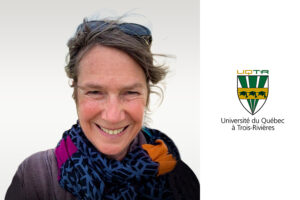
France Joyal
France Joyal is a retired professor associated with the Department of Philosophy and the Arts at UQTR (Canada). She holds a master’s degree in visual arts and a doctorate in art education. Her research focuses on aesthetic experience, artistic dynamics and cognitive companionship, as well as metaphorical, social and pictorial representation. Concerned with bridging the gap between theory and practice, she has been interested throughout her career in comprehensive and humanistic approaches to research. She has been actively involved in the development of training programs in research-creation, as well as teaching methodology and directing students in this same field of research. Her parallel artistic production in textile art and digital imaging speaks of connection, history and care.
Research-creation: force, movement or resistance?
A polysemic term, research-creation refers to the alliance of research and creative activity. Although it may be carried out by two people (researcher + artist), the research-creation I’m interested in here is carried out by one and the same person, who is sometimes a researcher, sometimes an artist. As artist-researchers, we are both the person who studies artistic production and the person who, moved by creative energy, realizes that production. For some thirty years now, Quebec academics have been talking a lot about research-creation; an extension of qualitative research, it is aimed at the study of subjectivity and its embodiment in matter. It’s not unusual for us to borrow methods, terms and theories from the human sciences in order to discuss and make sense of our practice. Heuristics, ethnography and phenomenology are just a few ways of approaching and documenting research-creation, which is so lively, furtive and elusive. Research-creation opens up a dialogue on subjectivity, artistic sensitivity and methodological restlessness. Resisting all preconceived models, it nevertheless unites researchers on one point: its indiscipline.