3 April 2024
11:45 – 12:30
Amphi 3
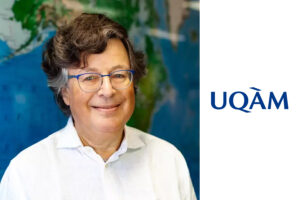
Michel Jébrak
Michel Jébrak is a geologist with a passion for the technical and human challenges of mineral resources. He has worked since 1987 as a professor in Quebec (UQAM, UQAT) and as a teacher in France, as a researcher, creator and manager of research groups, and as a mining explorer on every continent. His work focuses on the genesis of metal deposits, mining exploration techniques and the social and geopolitical implications of mineral resource exploitation. Author of books, including the latest on lithium, several hundred articles and lectures, his work has been recognized by several awards, including the Royal Society of Canada’s Barlow Prize in 2018. He helped found several applied mineral resource research groups in Canada. He has also chaired the scientific advisory board of Ouranos, a Canadian research center on climate change, and currently chairs the scientific advisory board of the PEPR Sous-sol bien commun project (BRGM-CNRS) in France.
Where will the mines of the energy transition be?
Every industrial revolution produces a global reorganization of mineral sources. Like previous revolutions, the mines of the current energy revolution will be deployed according to geological and metallurgical constraints, and geopolitical logics. Our knowledge is still insufficient to provide a complete overview of critical and strategic mineral resources, especially as prices have not yet stabilized. The first metal deposits are relatively rich and small in size. With the explosion in demand, they will gradually be replaced by larger, poorer deposits in widely differing geological environments. Unlike previous transitions, carbon impact and environmental externalities will have to be taken into account in the choice of deposit types. If global geopolitical fragmentation increases, deposits will also have to be located in friendly jurisdictions, requiring strategies that go beyond the simple availability of resources. These issues will be a source of tension and even conflict, as was the case with coal, oil and, to a lesser extent, uranium. To contain them, we’ll have to rely either on new geological discoveries, or on better market organization.