2 April 2024
10:55 – 11:40
Amphi 1
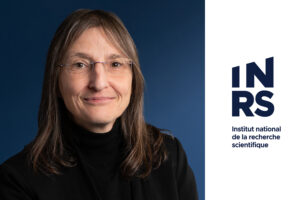
Cathy Vaillancourt
Cathy Vaillancourt is a professor at the Institut national de la recherche scientifique (INRS) and a researcher at CIUSSS du Nord de l’île de Montréal. Since 2019, she has been director of the Regroupement intersectoriel de recherche en santé de l’Université du Québec (RISUQ). She holds a BSc in biochemistry from Université de Sherbrooke and MSc and PhD degrees in biomedical sciences from Université de Montréal. She completed a postdoctoral fellowship in psychiatry at the Douglas Hospital (McGill University) and a fellowship in neuroscience at the University of Reading in England. She is interested in the role of the placenta in the establishment of fetal and postnatal phenotype in relation to disturbances in the maternal environment (prenatal stress, depression, xenobiotics, climate change, drugs) and obstetric complications (preeclampsia, prematurity, gestational diabetes). Her team is particularly interested in understanding the role of melatonin in placental function and fetal development. She has demonstrated that melatonin is produced de novo by the placenta and plays a crucial role in the smooth progress of pregnancy and fetal development. The ultimate aim of her work is to improve the health of pregnant women and the chances of better health for their children.
Is melatonin the guardian of pregnancy’s bioenergetic powerhouse?
The placenta plays a key role in pregnancy. This metabolically very active organ meets the bioenergetic needs required for its own rapid growth and that of the fetus. Placental metabolic dysfunction is a frequent feature of pregnancy pathologies, and although the cause-and-effect relationship is unclear, the “engine has run out of fuel”. Placental metabolism plays a vital role beyond energy production, and is linked to physiological and developmental processes. In this lecture, the alterations in energy metabolism that can explain placental dysfunctions linked to pregnancy problems, as well as the short- and long-term consequences for fetal development and health, will be discussed. Prof. Vaillancourt’s team has demonstrated that melatonin is produced de novo by placental cells, and that it plays a protective role against stress-induced damage by maintaining energy balance. The protective role of melatonin in placental energy metabolism dysfunction as a therapeutic strategy will also be discussed.